QDOBA Mexican Eats
- 4.8
- Rating
- 1.00M
- Installs
- Free
- Price

 Analysis by App-foxy
When I want Mexican food without turning the order into a long back-and-forth, I look for an app that makes customization easy, keeps pickup or delivery clear, and lets me repeat a meal without rebuilding it from memory. QDOBA Mexican Eats is built around that exact decision. It is a free Food & Drink app from Qdoba Digital, and its main purpose is to help me choose customizable QDOBA meals for pickup or delivery.
That sounds simple, but the usefulness depends on how well the app fits the way I actually order. If I already know what I want, the app can be more convenient than calling or standing in line. If I am comparing several restaurants, looking for the absolute lowest total, or trying to solve a complicated dietary question, the experience may require more attention than the short store description suggests. My view is that this is best treated as a practical ordering tool rather than a general restaurant-discovery app.
What I look for before choosing it
My first decision criterion is control. Mexican meals often involve several choices, and I do not want an ordering screen that hides those choices behind vague descriptions. With QDOBA Mexican Eats, the important question is whether I can shape the meal in a way that matches my appetite, preferences, and schedule. The app makes the most sense for people who already want QDOBA and need a smoother route from menu browsing to a completed order.
You May Also Like

 Blood Strike: 2.5 Anniversary
Blood Strike’s Loadouts Turn Every Drop Into a Tactical Gamble
A close look at Blood Strike’s custom loadouts: how fast access to signature weapons reshapes its battle royale rhythm, rewards preparation, and narrows the gap between fights.

 Pandora - Music & Podcasts
Pandora’s Music Is Easy to Start, but Harder to Recover
Pandora’s strength is its low-effort path from a seed to a station. Its weak spot is how much confidence it asks you to place in connection, setup, and quiet recovery.

 8 Ball Pool
 Is Built on Rivalries, Rematches, and Routine
A close look at the rivalries, rematches, shared routines, and unanswered safety questions that turn a quick pool match into a persistent mobile community.

 Samsung Music
’s Quiet Strength Is Playing What You Already Own
Its reach comes less from spectacle than from dependable access to a personal library. That simplicity is both the app’s strongest retention engine and its ceiling.

 AccuWeather: Weather Radar
AccuWeather Review: A Quick, Clear Forecast for Everyday Decisions
For everyday plans, the best forecast is the one you can understand quickly. AccuWeather makes rain timing, radar, and local conditions easy to act on, with a few trade-offs.

 Hill Climb Racing
Why Hill Climb Racing Still Turns Crashes Into One More Run
A tiny car, a bumpy hill and one more upgrade: Hill Climb Racing keeps resurfacing because its simple chaos makes every near-miss feel personal.
More From Our News Desk



The second criterion is convenience at the right moment. Pickup and delivery solve different problems. Pickup is useful when I am already near a restaurant or want to avoid waiting in a dine-in area. Delivery is more useful when I am working, caring for children, or simply do not want to leave home. I would not judge both options by the same standard: pickup is mainly about speed and accuracy, while delivery also depends on distance, timing, and the handoff outside the app.
The third criterion is repeatability. A good restaurant app should reduce effort the second time I use it. I pay attention to whether the menu is understandable enough to remember, whether a familiar meal can be ordered without starting from zero, and whether changes are visible before I submit. This matters more than flashy design because a food order is usually made when I am hungry and distracted.
There is also a practical question about device compatibility. The app was released on December 4, 2016, and its current version is 37.6.0, with Android support starting at version 7.1. That gives it a broad place on older Android phones, although I still recommend keeping the app updated when possible. A restaurant order is not the ideal moment to discover that an outdated installation behaves differently from the current menu or checkout flow.
How the ordering flow feels in everyday use
I find the app easiest to understand when I approach it with a specific plan. I choose pickup or delivery first, then browse toward the kind of meal I want instead of scrolling aimlessly. Once I reach a customizable item, I slow down and check every selection before moving on. That habit is important because customization is the app’s central strength, but it also creates more opportunities to overlook a small choice.
A realistic example is a busy weekday evening. I finish work later than expected, do not have ingredients at home, and want a meal that can be adjusted for different people in the household. I can use the app to decide between collecting the order on the way home or requesting delivery, then tailor each meal rather than forcing everyone into the same combination. In that situation, the value is not just ordering food; it is reducing the number of decisions I need to coordinate by message or phone.
I also like using the menu as a planning tool before I am ready to pay. Browsing first helps me decide whether the restaurant fits the group, especially when one person wants a larger meal and another wants something lighter. I would still review the final order carefully, because a customized meal can look correct at a glance while containing one selection I did not intend to make.
For a repeat order, I would take a moment after the first successful purchase to note the choices that worked. That may sound old-fashioned, but it avoids relying on memory when the menu changes or when I am ordering for more than one person. The app is most efficient when I use it deliberately rather than treating it as a visual menu to skim in a hurry.
Where the app is strongest
The clearest advantage is the direct connection between menu choices and the order I want to receive. Instead of explaining a complicated meal verbally, I can make the selections myself. That reduces one type of communication error, particularly when I am ordering several items with different preferences.
Customization is the reason to choose this app over a basic restaurant directory. A directory may show that QDOBA exists nearby, but it does not give me the same focused path from choosing a meal to arranging pickup or delivery. The dedicated app is better suited to someone who already knows the restaurant and wants control over the order details.
Another strength is that it supports two different kinds of convenience without making me switch to a separate food-search service. If I am passing a location on my commute, pickup is the logical choice. If I am staying home, delivery is more comfortable. Having both routes in one QDOBA-focused experience makes the app useful for changing routines rather than only one fixed type of customer.
The app also benefits people who dislike phone orders. I can review what I selected before confirming, which feels less stressful than trying to hear every option over background noise. For a group order, that visual review is especially helpful: I can check the items one by one and catch an accidental duplicate or an unwanted customization before submitting.
Its audience is broad as well. The content rating is Everyone, so the app is not positioned as an adults-only service. That does not guarantee that every food choice suits every person, but it does make the app approachable for households where different people may participate in choosing the meal.
Small habits that make the experience better
My first tip is to decide the fulfillment method before spending too much time customizing. Pickup and delivery can change the practical outcome of an order, and it is frustrating to build a meal only to reconsider the timing afterward. I treat the location and fulfillment choice as part of the meal decision, not as a final administrative step.
My second tip is to use a deliberate review pass. I check the main item, the custom selections, the quantity, and the fulfillment details separately. This is more reliable than reading the whole screen once. The extra few seconds are worthwhile when I am ordering for several people or adapting a meal to different preferences.
My third tip is to separate preference from certainty. If I am avoiding an ingredient for a serious allergy or medical reason, I do not assume that a customization control by itself answers every safety question. I would use the app to express the order clearly, then seek direct clarification from the restaurant when the consequence of an error is high. Convenience should not replace careful communication in that situation.
A fourth useful habit is comparing the final checkout total with the convenience I am buying. Pickup may be the better value when I am already nearby, while delivery may be worthwhile when leaving home would cost time or disrupt a schedule. The app helps arrange either option, but it cannot make every delivery situation equally sensible.
How it compares with the usual alternatives
The most obvious alternative is ordering in person. Walking into a QDOBA location can be better when I am already there, want to ask a detailed question immediately, or prefer to see the process before deciding. The app wins when I want to prepare the order in advance and avoid making choices while standing at the counter.
Calling the restaurant is another alternative. A phone conversation can be valuable for unusual requests or questions that do not fit neatly into a menu interface. On the other hand, it is easier to mishear a long list of customizations by phone, and I do not get the same visual record of what I entered. I prefer the app for ordinary, structured orders and a direct conversation for exceptional cases.
Third-party delivery services may be better when I am comparing several restaurants in one place or already have an account there. Their broader selection can be convenient for a group with conflicting cravings. The trade-off is that a QDOBA-focused app is more direct for someone who has already chosen QDOBA and wants to work through its menu rather than browse a marketplace.
A mobile browser can also be enough for occasional customers who do not want another app installed. I see the dedicated app as the better fit for repeat use, especially when I order from the same restaurant often. If I only need QDOBA once, the installation step may feel like unnecessary friction compared with using a browser or ordering at the location.
These alternatives are not failures of the app; they serve different decisions. The dedicated experience is strongest after the restaurant choice has already been made. It is less compelling when the real task is discovering where to eat, comparing many cuisines, or asking a question that requires a human answer.
What switching to it really involves
Moving from counter orders or a general delivery service to QDOBA Mexican Eats is not difficult, but there is a small adjustment period. I need to become familiar with the app’s way of presenting customizable meals, remember to check fulfillment details, and develop a review habit before submitting. The benefit comes after that initial learning: future orders can feel more organized because I know where to look and what to verify.
The cost of switching is mostly attention rather than money, since the app is free. That does not mean every order has the same overall cost. Delivery can involve a different practical trade-off from pickup, and a restaurant-specific app may not be the best place to compare a full range of alternatives. I would install it when I expect to order from QDOBA more than once, not simply because free apps are easy to collect.
There is also a social cost to consider. If everyone in a group wants a different restaurant, using a QDOBA-only app does not solve the coordination problem by itself. It works well when the group has agreed on QDOBA and needs separate custom choices. It is less useful as a neutral voting or restaurant-comparison tool.
On the positive side, the app has a substantial existing audience: it has passed one million installs, carries an average rating of 4.8 from roughly 38,000 ratings, and has about 6,100 written reviews. I read those figures as signs that the app is established rather than experimental, although popularity cannot guarantee that every order or device experience will be perfect.
Who should use it, and who should skip it
I recommend it to regular QDOBA customers, people who care about customizing meals, and anyone who alternates between pickup and delivery. It is particularly useful for households where each person wants a different combination, because entering the choices individually is clearer than trying to communicate them all at once.
I also think it suits busy workers, students, and parents who want to place an order before reaching the restaurant. The app can remove the need to wait while deciding, which is valuable when a short stop needs to stay short. The best results come when the user knows roughly what they want and takes a moment to review the details.
I would skip it if I rarely eat QDOBA, dislike installing restaurant-specific apps, or mainly want to compare many nearby restaurants. I would also choose a broader service or direct human contact when the order involves unusual questions that the standard customization flow cannot answer comfortably.
People with strict allergy concerns should approach it carefully rather than assuming that a digital selection is a complete safety guarantee. The app can help communicate preferences, but I would not let a convenient interface replace confirmation when cross-contact or ingredient uncertainty could have serious consequences.
My recommendation after weighing the trade-offs
My recommendation is straightforward: use QDOBA Mexican Eats if QDOBA is already one of your regular choices and you value customizable pickup or delivery. The free price removes the main barrier to trying it, and the app’s focused purpose is more useful than a general marketplace when I have already decided where I want to eat.
I would not call it an essential download for every food-ordering situation. Its value depends on loyalty to this particular restaurant and on whether digital customization saves me time. For one-off orders, in-person ordering or a browser may be simpler. For broad restaurant comparison, a marketplace may fit better. For sensitive ingredient questions, a direct conversation may be wiser.
Still, for the everyday scenario I care about most—choosing a meal quickly, adjusting it for different people, and deciding between collecting it or having it brought to me—the app earns a place on my phone. Qdoba Digital has made a focused tool rather than an all-purpose food platform, and that focus is exactly why I would recommend it to a friend who already enjoys QDOBA. If customization and repeat convenience matter more to you than restaurant comparison, this is the right kind of app to try.
FAQs for QDOBA Mexican Eats
01What features does the QDOBA Mexican Eats app offer?
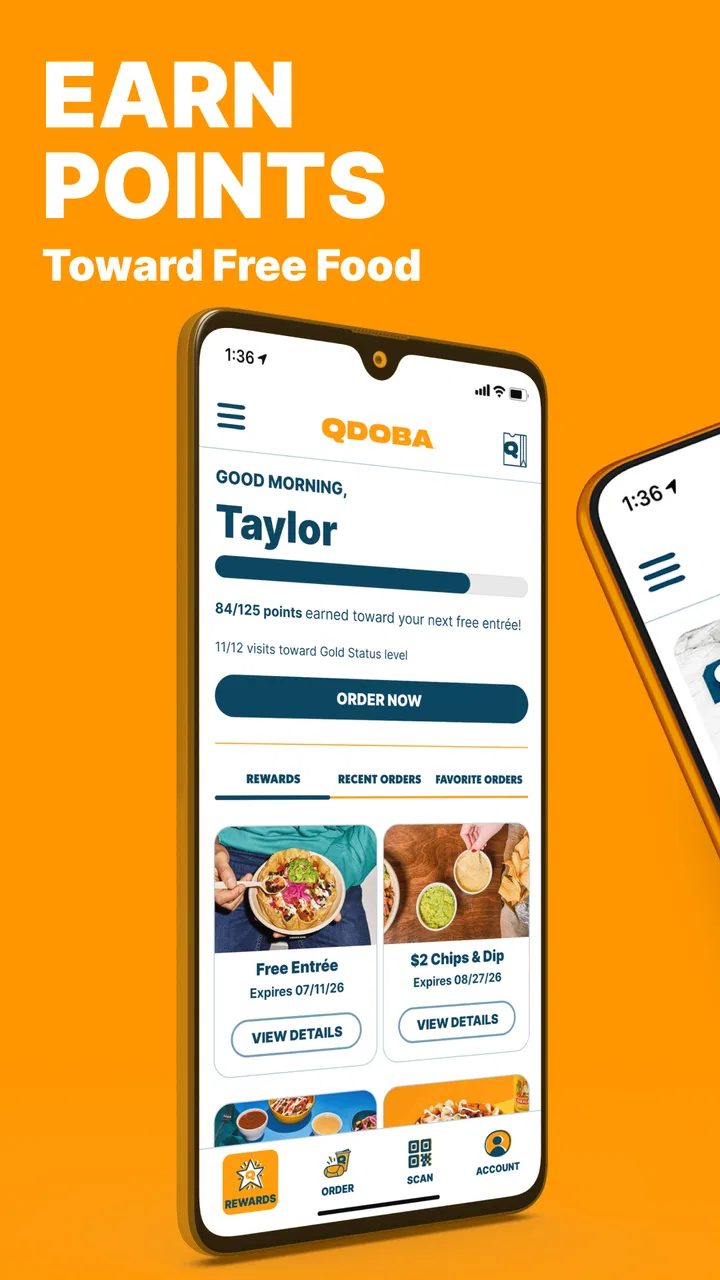
The QDOBA Mexican Eats app provides a seamless experience for ordering your favorite meals. Features include a customizable menu for personalized orders, location services to find the nearest restaurant, and a rewards program where you can earn points for every purchase. Additionally, it supports contactless payment options for added convenience.
02How does the QDOBA rewards program work?
The QDOBA rewards program allows you to earn points with every purchase made through the app. Once you accumulate enough points, you can redeem them for free food and drinks. The app also offers exclusive promotions and discounts to reward loyal customers, enhancing the overall dining experience.
03Is the QDOBA app user-friendly for new users?
Yes, the QDOBA app is designed with user-friendliness in mind. It features an intuitive interface with clear navigation, making it easy for new users to browse the menu, customize their orders, and manage their accounts. The app also provides helpful tips and guides to assist users throughout the ordering process.
04Are there any dietary options available on the QDOBA app?
Absolutely, the QDOBA app caters to various dietary preferences and needs. It offers options like vegetarian, vegan, and gluten-free meals. The app allows you to customize ingredients to suit your dietary restrictions, ensuring you can enjoy a meal that fits your lifestyle. Nutritional information is also readily accessible.
05What are the pros and cons of using the QDOBA app?
Pros of the QDOBA app include a user-friendly interface, a comprehensive rewards program, and the ability to customize your orders. It also offers convenient features like location services and contactless payments. However, some users might experience occasional glitches or slow loading times, which can be a downside.
Pros
- User-friendly interface for easy navigation.
- Customizable meal options to suit tastes.
- Loyalty program rewards frequent diners.
- Nutritional info available for health-conscious users.
- Quick and efficient order process.
Cons
- Limited delivery areas may restrict access.
- Occasional app crashes disrupt experience.
- Payment options could be more diverse.
- No offline menu access for planning.
- Push notifications can be overwhelming.

QDOBA Mexican Eats
Gallery